


Church Safety and Security Protocols: First Steps To Layered Protection
If you've been thinking about church safety, you're not alone. Most congregations in the country have had at least preliminary conversations about it in the last few years. Some have established security ministries with formal training and equipment. Many more are wondering where to begin, what's actually necessary, and how to do it without changing the welcoming character of their sanctuary.
This guide is for the people doing the wondering—pastors, deacons, security ministry volunteers, board members, and lay leaders trying to make sensible decisions about church safety without a security background and often without a big budget. It covers the full picture: what the actual threats are, how to think about preparedness, what equipment matters at what stage, and how to fund it.
A few honest framing notes before we start.
First, the dramatic threats get the headlines, but they're not the most common ones. According to faith-based security data, roughly 80% of incidents at houses of worship in recent years have been property crimes—vandalism, theft, and arson—not violence against people. Of the violent incidents that do occur, many trace back to domestic disputes, mental health crises, or local interpersonal conflict rather than ideological attacks. A good safety plan addresses all of this, not just the worst-case scenario.
Second, every congregation is different. A 60-person rural church meeting in a one-room building has different needs and resources than a 3,000-person suburban campus with a school and a daycare. Apply this guide selectively. Most of what's here scales down for smaller congregations and scales up for larger ones.
Third, this isn't about turning your sanctuary into a fortress. The mission of the church is to be open—to welcome strangers, to embrace the troubled, to be present in the community. Done wrong, safety measures contradict that mission. Done right, they protect it. The goal isn't to choose between openness and safety. It's to maintain both.

What Threats Churches Actually Face
Before deciding what to do about church safety, it helps to look honestly at what congregations actually experience. The data is clearer than most assume.
Property crime is the most common incident
Faith-based security tracking organizations (including FB-ISAO, the Faith-Based Information Sharing and Analysis Organization) report that the majority of incidents at houses of worship are property-related—vandalism, theft, and arson. Sound equipment, computers, vehicles, sacred items, and cash offerings are all targets. Arson, in particular, has been a recurring pattern, often using accelerants like gasoline, often targeting the building when no one is present.
Property crime gets less media coverage but represents the threat most churches will actually encounter at some point. A safety plan that ignores it isn't a complete plan.
Violence against people is rarer but does occur
Of the violent incidents that do happen at houses of worship, FBI and Department of Justice data shows reported assaults and attacks against people at churches, synagogues, temples, and mosques surged nearly 100% between 2021 and 2023. The categories include:
- Domestic violence spillover—incidents where an estranged partner enters the sanctuary to confront or harm a congregant
- Mental health crises—individuals in crisis acting unpredictably, sometimes violently
- Hate-motivated attacks—incidents targeting a congregation based on faith, ethnicity, or perceived political alignment
- Active shooter incidents—the rarest but most catastrophic category
- Verbal threats and bomb threats—disruptions short of physical attack
- Theft escalation—burglaries where someone unexpectedly encounters a congregant
Notably, much church violence stems from causes unrelated to ideology—domestic disputes, mental illness, and ordinary criminal acts that escalate. Planning only for ideological attackers misses most of the realistic incidents.
Other risks worth including in the plan
A comprehensive church safety plan also addresses:
- Medical emergencies during services (cardiac events, allergic reactions, seizures, falls)
- Severe weather (tornadoes, lightning, flooding) requiring shelter-in-place
- Fire safety, especially in buildings with candles, heating systems, or kitchen facilities
- Cybersecurity (church management software breaches, phishing targeting administrators)
- Child safety policies (especially for nurseries, children's ministries, and youth programs)
- Custody disputes (a non-custodial parent attempting to take a child from a children's ministry program)
None of these are dramatic. All of them happen. A safety ministry that's only thinking about active shooters isn't doing its actual job.
A Framework for Church Safety
The Department of Homeland Security's Cybersecurity and Infrastructure Security Agency (CISA) has published a guide called "Mitigating Attacks on Houses of Worship" that's worth reading directly. It uses a layered approach that maps well to how most churches actually need to think about this:
- Outer perimeter—the parking lot, exterior grounds, exterior of the building. Lighting, cameras, visible signage, and trained observers.
- Middle perimeter—building entrances and exits. Greeters who actually greet, locked side doors during services, controlled access to non-public areas.
- Inner perimeter—the sanctuary, nursery, classrooms, offices. Trained ushers, communication systems, emergency protocols, equipment where appropriate.
This guide will roughly follow that structure: people first, then communications, then physical equipment. Most churches benefit far more from improvements in the first two layers than from investing in the third.
Layer 1: People—A Safety Ministry
A church safety ministry is a team of trained volunteers (sometimes paid staff at larger churches) whose role is observation, prevention, and response. Forming one is the single highest-impact thing most congregations can do. It doesn't require expensive equipment and it doesn't require anyone to carry a weapon (more on that below).
Who should be on a safety ministry team
Good safety ministry volunteers typically share certain traits:
- Calm temperament under stress
- Discretion (won't make a scene over a minor incident)
- Comfortable with conflict de-escalation
- Available consistently for services and events
- Respected within the congregation
- Trained in basic first aid and CPR (or willing to be trained)
- Background-checked through your church's standard process
People with relevant professional backgrounds are valuable—current or former law enforcement, military, EMTs, security professionals, nurses, mental health professionals, social workers. But the team shouldn't be exclusively people from those backgrounds. The most important quality is calm presence and good judgment, which can come from any vocation.
Many churches also recruit ushers who already have responsibilities at services to take on observation roles, since they're already positioned at entrances and in the sanctuary anyway.
What a safety ministry actually does
During services and events:
- Observes the parking lot and exterior for unusual activity
- Greets people at entrances, noting anything that seems off
- Positions team members visibly but unobtrusively during services
- Responds to medical emergencies as first on scene
- Manages disruptive individuals (drunk, mentally ill, angry)
- De-escalates verbal conflicts before they become physical
- Coordinates with pastoral staff on counseling situations
- Maintains awareness of and communication about specific known concerns (custody disputes, threats, etc.)
Outside services:
- Conducts regular building walk-throughs and assessments
- Manages access during weekday events, meetings, and ministry programs
- Trains other staff and volunteers on emergency protocols
- Maintains relationships with local law enforcement
- Reviews and updates emergency response plans
Training resources
Free and low-cost training resources for church safety teams:
- CISA Houses of Worship Resources—federal resources including the official "Mitigating Attacks on Houses of Worship" guide, free vulnerability assessments through Protective Security Advisors, and exercise scenarios
- Local law enforcement liaison programs—most police departments offer free walk-throughs and consultations for congregations. Many have dedicated houses-of-worship liaison officers.
- Denominational resources—most major denominations now have safety guidance documents. Check with your denominational headquarters or regional body.
- Faith-based security organizations—Sheepdog Church Security, Strategos International, and similar organizations offer training programs, both free and paid. Quality and approach vary; vet carefully.
- Run/Hide/Fight training—free training materials from the Department of Homeland Security covering active threat response. Adaptable to church settings.
- First aid and CPR—Red Cross and American Heart Association certifications are widely available at low cost. Team members should keep these current.
The armed security question
Few topics in church security generate more debate than whether the safety ministry team should be armed. This guide isn't going to take a position on that—the right answer depends on your denomination's stance, your state's laws, your insurance requirements, your congregation's culture, and your specific risk profile.
What we will say is this: the question of whether to be armed should never come first. The questions that should come first are:
- Do we have a safety ministry team at all?
- Are they trained in observation, de-escalation, and first aid?
- Do we have basic communication systems and emergency protocols?
- Have we addressed the realistic threats (property crime, medical events, severe weather) that are far more likely than violent attacks?
- Have we done the basics of access control during services?
Congregations that prioritize the arming question before answering these often skip the foundational work—and the foundational work matters far more in most realistic scenarios. A team of trained, calm, unarmed safety volunteers with good communication and de-escalation skills will outperform armed but untrained volunteers in nearly every situation.
If your congregation does decide to have armed team members, the requirements should be substantial: appropriate state-issued licensing, regular firearms training (not just qualification), documented use-of-force policies, liability insurance review, and clear protocols on who is authorized when. Several states have specific laws governing armed security at houses of worship; consult an attorney.
Layer 2: Communications and Protocols
After people, the most important investment is communication. During any incident, the speed of information determines the outcome. Most churches under-invest in this layer because the equipment is unglamorous.
Internal communication during services
Safety team members need to reach each other and pastoral staff during services without being conspicuous. Common solutions:
- Two-way radios with earpieces—most common, relatively inexpensive ($100–300 per unit for decent quality), low learning curve. Use a designated channel and protocol words. Test before every service.
- Cell phone group messaging—backup or primary for very small churches. Slower than radios but free. Group chat apps work fine; just confirm team members are checking them.
- Mobile emergency notification platforms—purpose-built apps for church security (Saber, Active Defender, CrisisGo, and others) that combine team coordination, mass notification, and incident tracking. Monthly subscription cost, more capabilities than radios alone.
Mass notification to the congregation
If an incident requires congregants to take action—lockdown, evacuate, shelter from severe weather—you need a way to tell them quickly. Options:
- Public address system audible throughout the building (sanctuary, classrooms, nursery, fellowship hall, restrooms)
- Coded language from the pulpit ("Code Blue in the nursery" telegraphs information to trained staff without alarming congregants unnecessarily)
- Mass text or email notification systems for events outside services
- Visual alerts (flashing lights or signage in noisy areas like the nursery)
Calling for outside help
In any emergency requiring police, fire, or EMS:
- At least two team members should be authorized to call 911 directly without checking with leadership first
- All team members should know the exact street address (not just "the church")—useful when phones are in a panic state
- Pre-staged information sheets at each phone or radio with the address, nearest cross street, and main entrance description
- Designated meeting points for first responders so they can find the incident quickly in larger buildings
- Established relationships with local law enforcement so dispatch recognizes the church when calls come in
Documented emergency action plans
Written plans should exist for at minimum:
- Medical emergency response (cardiac, allergic reaction, fall, seizure)
- Severe weather (tornado, lightning, flooding)
- Fire (evacuation routes for sanctuary, classrooms, nursery)
- Lockdown (intruder, active threat)
- Lost child
- Disruptive individual
- Suspicious package or bomb threat
- Power or utility failure during services
Plans should be short—a single page each, focused on what to do in the first five minutes. Long plans don't get read. Conduct tabletop exercises annually to walk through them with the team.
Layer 3: Physical Equipment
Once people and communications are in place, physical equipment fills in. The categories that matter most:
Access control during services
During services, all entrances except the designated main entrances should be locked from the outside. This is the single most important physical security measure most churches can implement, and it costs little to nothing.
- Side doors, basement doors, and back entrances locked during services
- Trained ushers or greeters at the main entrance, ideally able to observe approaching vehicles in the parking lot
- Visible cameras at primary entrances
- Clear signage directing visitors to the main entrance
- Latecomers entering through the staffed main entrance rather than slipping in unobserved
A common mistake is leaving multiple doors propped open during services for comfort. Don't. One main entrance, staffed and observed. Other entrances unlocked from the inside for egress but not entry.
Lighting
Exterior lighting is one of the highest-ROI security investments. Property crime drops significantly in well-lit parking lots and building exteriors. LED retrofits make this relatively affordable. Make sure:
- Parking lots are well-lit during evening services
- Exterior entrances are lit during all hours of operation
- Motion-activated lighting covers less-trafficked sides of the building
- Lights are functional and replaced quickly when out
Surveillance cameras
Modern IP cameras are inexpensive, reliable, and easy to install. A basic system covering main entrances, the parking lot, and key interior areas can be set up for a few thousand dollars and provides:
- Documentation of incidents (police investigations rely heavily on this)
- Deterrence (visible cameras reduce certain crimes)
- Real-time monitoring during services if staffed
- Evidence in disputes, custody situations, and false allegations
Two notes on cameras: post visible signage that the property is monitored (this is both legally required in some jurisdictions and operationally important for deterrence). Also, retain footage for a reasonable period—most systems default to 30–90 days, which is appropriate for most situations.
First aid and AED
Every church should have:
- At least one well-stocked first aid kit at a clearly marked, accessible location
- An AED (automated external defibrillator) on the premises, with multiple staff trained on its use
- CPR certification kept current for safety ministry team members
- Specialized first aid supplies if the congregation includes individuals with known medical needs (epinephrine auto-injectors, glucose tablets, etc.)
Many states have legislation requiring AEDs in churches or providing legal protection for AED use. AEDs cost $1,200–2,500 and can save lives that no other equipment can save. This is one of the best safety investments a church can make.
Fire safety
Standard requirements that some smaller churches overlook:
- Functioning smoke detectors throughout the building, tested regularly
- Fire extinguishers (Class A for sanctuary; Class B in kitchen and maintenance areas; Class C near electrical equipment)
- Clear, unblocked emergency exit signage with battery-backup illumination
- Posted evacuation routes
- Annual fire drills, especially in larger buildings
- Heating system inspection and chimney cleaning where applicable
- Storage of flammable materials (cleaning chemicals, paints) in proper containers and locations
Arson is one of the most common attacks on houses of worship, often committed late at night when buildings are empty. Smoke detection with offsite alerting (monitored fire alarm systems) shortens response time dramatically.
Ballistic-resistant equipment
Where ballistic equipment fits in a church safety plan depends entirely on threat assessment. For most congregations, it's not the first or second or third investment to make—it's a later-layer addition once the foundational layers are solid.
For churches that decide ballistic-resistant equipment fits their plan, common applications:
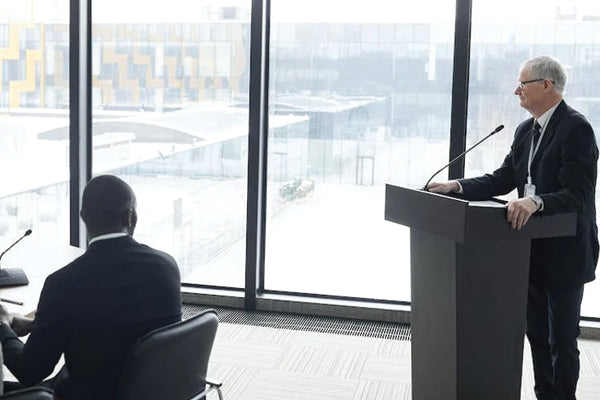
- Bullet-resistant pulpits or lecterns—provide cover for clergy at the most exposed position in the sanctuary. Solid wood construction with concealed ballistic core; from the audience perspective, indistinguishable from a regular pulpit.
- Mobile ballistic panels—floor-standing panels that can be repositioned during a lockdown to create cover at sanctuary doorways or in narthex/foyer areas. Many double as bulletin boards or signage during normal use.
- Ballistic-rated reception furniture—for church office reception areas or security ministry stations.
- Handheld ballistic shields—compact shields stored in central locations for safety team response.
- Ballistic-rated entry doors and vestibules—architectural-grade installations for facilities with elevated threat profiles.
Most ballistic furniture for churches is specified at NIJ Level III (rifle-rated) since the relevant threat scenarios involve rifle threats. Some applications use Level IIIA (handgun-rated) where the lower weight and cost are appropriate to the realistic threat. We've written a separate plain-English guide to ballistic protection levels that covers the specifics.
|
On using ballistic furniture in a sanctuary Some congregations resist the idea of any visibly protective equipment in the sanctuary because it changes the welcoming character of the space. The strength of modern ballistic furniture is that it doesn't have to be visible—a bullet-resistant pulpit looks like a pulpit, a ballistic panel looks like a bulletin board. The decision isn't between an unprotected sanctuary and one that feels like a fortress. It's whether the existing furniture can do double duty, providing protection without changing what congregants see. |

→ Shop Anti-Ballistic Podium
How Churches Fund Safety Improvements
Most church safety improvements aren't paid for from the operating budget. The most common funding paths:
The Nonprofit Security Grant Program (NSGP)
The Federal Emergency Management Agency's Nonprofit Security Grant Program is the single most important funding source most churches don't know about. Key facts:
- Eligible to 501(c)(3) nonprofits—including churches, synagogues, mosques, and temples
- Churches generally don't need formal IRS 501(c)(3) recognition to qualify; the IRS exempts most churches automatically
- Up to $200,000 per location, with applications for up to three sites per cycle
- No local match required—the full award is usable
- Reimbursement-based: the organization pays for approved purchases first, then submits for reimbursement
- Applications submitted to your State Administrative Agency (SAA), not directly to FEMA
- Application cycles typically open February–April and close April–June each year
- Annual federal allocation has been $250–450 million in recent years
Allowable uses include security cameras, access control systems, fencing, lighting, ballistic-resistant glass and doors, cybersecurity improvements, training, and security consulting—but generally not personnel salaries or items unrelated to physical/cyber security.
The application process is involved. It requires a documented vulnerability assessment (often free from local law enforcement or a CISA Protective Security Advisor), an investment justification, organizational documentation, and demonstration of elevated risk. Most successful applicants begin preparing 6–9 months before the application window opens. Consider starting now if you haven't already.
State-level grant programs
Several states administer their own nonprofit security grant programs that complement or extend the federal NSGP:
- California State Nonprofit Security Grant Program (CSNSGP)—$76 million allocated for the 2025–2026 cycle
- New York State Securing Communities Against Hate Crimes Grant Program
- New Jersey Nonprofit Security Grant Pilot Program
- Illinois Nonprofit Security Grant Program
- Florida Nonprofit Security Grant Program
Several other states have introduced or expanded programs. Check with your state's homeland security or emergency management agency for current opportunities.
Insurance company partnerships
Church insurance carriers (Church Mutual, Brotherhood Mutual, GuideOne, Philadelphia Insurance, and others) often offer:
- Premium discounts for documented security improvements
- Free risk assessments and walk-throughs
- Discounted security equipment through partner programs
- Active shooter liability coverage as an endorsement to standard policies
- Educational resources and training materials
Talk to your insurance broker. The conversation is often the cheapest place to start; you may discover both available discounts and gaps in current coverage.
Denominational resources
Many denominations have grants, low-interest loans, or matching funds for safety improvements. Check with your denominational headquarters, regional body, or judicatory. Some denominations have specific programs after major incidents within the denomination.
Congregation-funded approaches
For improvements that won't be grant-funded:
- Designated giving campaigns to a named safety fund (many congregations have raised $20,000–$100,000 this way for specific projects)
- Memorial gifts in honor of victims of attacks at other congregations (a tradition that has emerged at many churches over the last decade)
- Capital campaigns that include safety improvements alongside other building investments
- Bequests and estate gifts directed to specific safety purposes
- Partnerships with local businesses that have charitable giving programs (some hardware stores, lighting companies, and security firms have church partnership programs)
If You're Starting From Zero
If your congregation hasn't begun safety planning at all, the order of operations matters. Don't lead with equipment. Lead with people and assessment.
A reasonable first-year plan for most congregations:
Months 1–3: Assessment and team formation
- Contact your local police department and request a free walk-through and assessment
- Contact CISA and request a Protective Security Advisor assessment (free for nonprofits)
- Recruit 5–10 initial safety ministry volunteers
- Get the safety ministry team CPR and first aid certified
- Talk to your church insurance broker about current coverage and potential discounts
Months 4–6: Foundational improvements
- Implement access control during services (lock side doors, staff the main entrance)
- Establish internal communication for the safety ministry team (radios or app-based)
- Write basic emergency action plans for medical, fire, severe weather, and lockdown
- Improve exterior lighting and basic camera coverage
- Install or verify AED, first aid kits, and fire safety equipment
Months 7–12: Training and refinement
- Conduct tabletop exercises walking through emergency scenarios
- Train pastoral and administrative staff on emergency protocols
- Begin work on an NSGP grant application for the next fiscal year cycle
- Evaluate whether physical hardening (ballistic equipment, vestibule improvements) fits the threat assessment
- Review and update plans based on what you've learned
After the first year, the safety ministry should be self-sustaining: regular team meetings, ongoing training, periodic assessments, and incremental improvements. Most churches find that once the foundation exists, additional work happens naturally as new needs and opportunities emerge.
The Harder Questions
A few questions worth sitting with as a congregation, beyond the practical ones.
How do we balance hospitality and protection?
This tension is real and isn't going away. Most congregations resolve it by recognizing that protection done well doesn't sacrifice hospitality—it just changes what hospitality looks like. A trained greeter who genuinely welcomes visitors AND notices when something seems off is more hospitable than an untrained one. A locked side door doesn't reduce welcome; the staffed main entrance does the welcoming better than five unstaffed entrances could. The forms change. The spirit doesn't have to.
What about welcoming people who make us uncomfortable?
Most church safety incidents involve people in some kind of distress—mental illness, addiction, homelessness, family crisis. These are people the church is supposed to serve. A safety ministry shouldn't be in the business of ejecting anyone who seems different. It should be in the business of being attentive, calm, and present, ready to de-escalate or get help if needed, but defaulting to welcome.
The hardest discernment is when someone who needs the church's help could also pose a risk. There's no formula here. Strong relationships with mental health professionals and a willingness to involve them are often the right path. So is humility about how often "makes us uncomfortable" turns out to be just a misread.
What if our denomination doesn't believe in armed security?
Many denominations explicitly oppose armed security or take pacifist positions that complicate the question. If your denomination has a clear stance, the safety ministry should align with it. There are many effective safety approaches that don't involve weapons—observation, communication, de-escalation, physical hardening, training, and partnership with law enforcement. None of these require congregants to be armed. A robust safety program is possible without firearms; in many congregations, it's the better fit.
What about smaller churches with no budget?
Most of what matters most costs little or nothing. A safety ministry team is free. Locking side doors is free. Posting trained greeters is free. CPR certification is low-cost. Free assessments are available from local law enforcement and CISA. Free emergency planning templates are widely available. Cell phone group messaging works for team communication if radios aren't affordable. Most of the foundational work is achievable for a congregation of 50 people on a budget of a few hundred dollars per year.
The expensive items—ballistic equipment, comprehensive camera systems, secure vestibule construction—can wait until they fit the threat assessment AND the budget. For most small churches, they may never be the right investment. That's okay. The basics done well outperform the dramatic equipment done in isolation.
Closing Thoughts
Church safety isn't a project with an end. It's a posture that develops over time—attentive, prepared, calm, hospitable. The congregations that do it well aren't the ones with the most expensive equipment or the most elaborate plans. They're the ones where the safety ministry has become part of the rhythm of congregational life, where pastoral and lay leadership work together, where the basics are maintained and updated, and where the mission of the church to welcome and serve continues without being compromised by the work of protection.
If your congregation is just starting this work, you're not behind. Many congregations are starting later than they should have. The right time to begin is now, in whatever form fits your situation, at whatever pace fits your resources. Small steps add up. The first conversation matters more than the first purchase.
If you've been doing this work for years, thank you. Volunteer church safety ministers are one of the most undervalued forms of service in American congregational life. Most of what they do is invisible. All of it matters.
If your safety plan includes physical protection:
Podiums Direct carries a line of bullet-resistant pulpits, lecterns, mobile panels, and protective furniture designed for houses of worship. Solid hardwood construction, concealed ballistic cores, and a range of options for traditional and contemporary sanctuaries. All handcrafted in the USA with lifetime warranties on materials and craftsmanship.
For more on ballistic protection specifically, see our complete buyer's guide and our plain-English guide to ballistic protection levels.
→ Ballistic Protection Levels Explained
To discuss what fits your sanctuary, threat profile, and budget, our team is happy to help.
✉️ sales@podiumsdirect.com
Sources and references
- Cybersecurity and Infrastructure Security Agency (CISA) — Mitigating Attacks on Houses of Worship Security Guide
- Faith-Based Information Sharing and Analysis Organization (FB-ISAO) — Annual incident data
- FBI Hate Crime Statistics and FBI Uniform Crime Reporting
- U.S. Department of Justice statements on incidents against places of worship
- FEMA Nonprofit Security Grant Program (NSGP) — Program Notice of Funding Opportunity
- Department of Homeland Security — Active Shooter Preparedness Resources
- State Administrative Agency NSGP application materials
- Church insurance carrier risk management publications (Church Mutual, Brotherhood Mutual, GuideOne)
Federal grant programs and state legislation change frequently. Verify all funding details with your State Administrative Agency before relying on them. The CISA "Mitigating Attacks on Houses of Worship" guide is available free at cisa.gov and is recommended reading for any congregation's safety ministry.


Leave a comment